
Jean Bahnuk (Sawyer)
Memories of East 14th Avenue and Clark Park
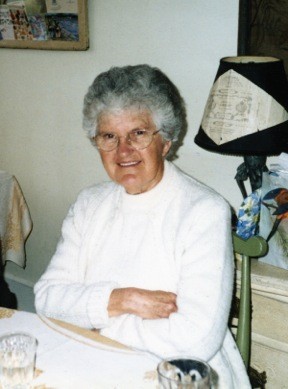
I was born in the house on 1541 East 14th Avenue in Vancouver in 1931. I grew up in it. I have never left the house and raised my family of 5 children there“.
My grandparents came up here from the States. They were American and they lived near here on the 1500 block of east 8th Ave. They came in 1906. They were pretty much pioneers and there was nothing much here. I believe they came from Wisconsin and were in the cheese business. I never knew my grandparents. My parents were also born in the States and came up here as adults. I had 3 brothers and 2 sisters. My oldest brother died at 16 in January of 1939. The others stayed here except for my brother who was the next oldest who moved to Seattle to work with Boeing. The rest of us just stayed here. We got married and the furthest one was in Coquitlam so we were all pretty handy to each other.
Clark Park was our second home. We had our chores because my Dad died 12 weeks after my brother. My Mom knew he was dying. I have lots of pleasant memories of the park. There were lots and lots of trees. It was well utilised because that was the only place for people who didn’t have money to travel. There was a little wading pool and, you couldn’t swim but you could splash and cool off. We grew up in that pool, the same pool that’s there now. And where the baseball field is now, my younger brother and some boys around the neighbourhood formed a soccer team. Just young kids on Saturday afternoons, they used to invite surrounding districts to come and they compete against one another and that was our Saturday entertainment. It was exciting. I’m very proud to say that my younger brother, he didn’t know much about soccer at the time, they played and had a good time then at the end of his soccer career he became quite notable playing against Sir Stanley Mathews from England. He was on the All-Star team. I’ve got nice write-ups about him, how he kept this Sir Stanley from scoring goals and the fellow that was Stanley’s sidekick looking after him that nothing happened to him, he threatened my brother, “If you touch him and knock him down again, you’re in for it!” But anyhow that was our entertainment.
The park was really really used because we had the musical bandstand there and there was different bands that would come through on evenings when it was nice out and play up there. It was beautiful. And if I remember right there was Mr. Maddams from the bottom of the park, he’d play in the band up there.
In the end, after Mr. Maddams passed away, his wife got very friendly with me and I used to go down to see her every night because she lived alone there. We became very good friends. And then she got cancer… she was 96, still dancing, she had all her plans for New Year’s to go out to UBC to Abethau to go dancing, she had her tickets and was going but got breast cancer and that was the finish. Maddams Street is named after his parents. His parents pioneered all the land from China Creek up to 15th and Knight Rd but lost a lot of it due to taxes in the depression days.
There were creeks still running though the park. I have a book – I’m not sure if one of them was called Wilson Creek.
Queen Alexandra School is where I went. My Mom had 5 kids going there and then she had 9 grandchildren going through there. But my mother, along with lots (I shouldn’t say lots because there wasn’t all that many people in the district in those days) of women, organized the PTA at Queen Alexandra and then very often on nice days after the 24th of May they would bring the students up for a picnic in their school lunch hour. They loved the park and they could wade in the pool for a few minutes and cool off and then go back to school. They loved the park. It was just wonderful and the memories I have….
At the bottom of the hill was a big old house that was owned by the City which they rented out to one family, a Russian family, but the house was made into suites…the main floor was a main suite, and there were 2 suites on the 2nd floor, a third suite on the third floor and a bed sitting in the basement.
And all around that district there was orchard…every kind of apple tree you could think of, pear trees, cherry trees, that was mainly on the 14th side. In those days, Woodland went right through from 14th to 15th and then there was bush on the other side of the house. And there was a little house in the back there in the bushes and people lived in it because I used to babysit their kids for them. But from the lower tennis court over to 15th, going up to the entrance to the park, you would say Dumfries Street there were 4 houses went up and from the lower tennis court there used to be a holly hedge that separated the houses from the park. I knew kids in two houses there on 15th and we all played together in the park. The park was just full if kids. It was hard to find spots in the pool. Each morning there was fresh water put in the pool and everyone was there to jump in. We had it nice there in those days. Nice weather where you could count on it going to be nice for a couple of months. It’s changed.
And then the baseball players, they took the soccer field away from ‘em but we used to go up every night and watch the baseball games up there and it was a really beautiful neighbourhood and there was nothing…well there was a few bad things that happened.
In later years they put a house, a field house for a senior to live in to watch that nothing went wrong in the park. And then, I’m not sure how old he was but he dropped dead from a heart attack so we had to get another one in and then some smart kids… One night I was sitting looking out the window and I see the park house on fire and these kids had stuffed clothes down in the chimney and threw gasoline in them and that was the end of our house up there and that was too bad because the man that lived there had one end of the field house and then at the other end was a place for young kids that were hired by the city and they did arts and crafts. My kids were around and that would have been between 1953 and 62. They made games for the kids to play with up there. It was well supervised but we lost that and so then they brought in a portable and used that and each year that arrived just after the 24th of May and the kids were so excited they were there before the instructors.
And then another nice thing was too, I’m pretty sure it was Dairyland, would come once a year in the summer and take a bus load of kids to the farm and I went quite often because my kids were going and they needed adults so many per children and they’d let the kids learn to milk a cow. It was a really nice outing for us, adults and kids.
And then we had the tennis courts and so I grew up in the tennis court too. But those tennis people that really took it to heart would be there before you could see in the morning because there were only two courts and some of them played with flashlights at night. They were the upper courts. The lower courts came after- I got those. I was asked to go to a meeting at the Parks Board. I had a friend on 10th Ave. The ones between 11th and 10th – that lots of tennis courts came together. Well they couldn’t put them down here because they wouldn’t be regular sized courts. They couldn’t put them on 11th because it was built over a dump. And they thought with all those people the courts wouldn’t stand up.
Well May Brown was president of the Park Board then so finally I stood up and I stood waiting and waiting and finally she said “I think there is somebody in the audience who might want to say something. And I said, ”Yes. I didn’t know about this meeting tonight till suppertime and my friend phoned me and asked me if I could go and I’d like to say one thing. I know there are a lot of tennis courts here and 11th Ave is built over a filled in area. But my kids played hockey at the Trout Lake Community Centre and that centre is built on peat. I said we used to go over there and sink into our necks and throw peat at one another. And I said as far as the tennis courts on east 14th and the ones that are there now are not regulation size but there’s no problem with them playing there and you can never get a spot. You have to line up. So don’t tell me that you can’t do these things. Had I know about this meeting tonight I would have brought Mr. Charles Maddams with me. Because it was his father who pioneered this land and he could give you a good earful on things. “And she says “ I think you have said enough. I said, “Well OK. “
So then they adjourned the meeting and we had to go outside and then Simma Holt, the liberal leader she came outside and she said to me, ”Why aren’t there more people like you that will speak up instead of talking in their kitchens and not letting them know that things are possible to have if you want.” And I said, “ I’m tired of sitting here and listening to how you can spend a million dollars on the Kits Pool and a million dollars somewhere else in the West End. You come and count how many houses are on our street and you’ll find out we pay more taxes than you do in the west part.” But she cut me off. Anyway I had my say and we did get the tennis courts. It was just an excuse to not make them regulation size. Those tennis courts are always full.
Mrs Maddams house was the stucco house on the park. First of all they built a wooden house. They owned the property and then they decided where the red house was a double lot and part of the property was going up for sale. So they bought that piece of land and they rented their first house out and moved into the stucco house. There was a problem there in the red house because that was a dope house…for about 30 years. What was really bad was, first of all, they got raided and that was when my oldest boy wasn’t in school. It was big bad dope like heroin. No-one would do anything about it. They raided the garage and that was where the dope was. It was a very sad situation in a way because the people that lived in the house – and they were caretakers at the Patricia Hotel on Hastings and they were coming home at night from work when someone went through a red light and hit their car and he was thrown up into the school yard at Alexandra. They didn’t think that Mrs Jang would pull through but she fooled them and lived longer than they expected and she was a really nice lady. She wasn’t involved with the drugs.
After they raided the garage and took it down, one of the older boys started wrapping dope in packages and took some candies with him and gets one of the little kids playing in the park. “If you put this in such and such a spot I’ll give you some candy.” Well then someone reported that so that stopped but it continued on. They did start selling drugs. We told the police and they did nothing about it, said it was a private house. And then there was a for sale sign on the house.
At first Mrs Maddams used to come up and watch the TV with us, the night soap operas, and then I got thinking. This isn’t a good idea. I walk home with her and she goes in her house and I’m standing there and then I wave goodbye and I thought. They know she’s alone so I said how about I come to your house.
The people next door didn’t want anyone knowing what was going on. The police weren’t doing anything about it. I said to Mrs. Maddams, “One thing about these people coming and going at night is you’re safe” because when I went down there they would say, “Hi Jean, how are you tonight?” So there was the good and bad out of it. The fellow that was the headcheese got married and they had a family and he got turned around and his grandchildren meant everything to him. But then the youngest boy got involved in drugs and he had to sell the house because he mortgaged the house. We heard there was a drug deal that went bad.
Mrs. Jang used to go up to church with the Mom and play bingo. The younger boy moved to 12th and Victoria and died a few years ago. The family named was Jang.
About the Clark Park Gang… I had bought a new record player for the kids and we had a swimming pool in the back yard at the time. I must have gone to West Broadway for something and I remember getting off the bus at Woodland and as I was walking as I got closer and closer to 12th Ave, I could hear all this music and I thought, “Don’t tell me the kids have taken the record player outside and they’re in the pool and are blaring the music.” When I go up to the lane there was a flat deck truck on Woodland below the park and I saw all these amplifiers and the music just blasting and it made me feel better that it wasn’t my kids. Anyway they, the Clark Park Gang, were protesting against police brutality. The Clark Park Gang was not from around here. They came from other districts. The police did get them out of there. That would have been the early 60’s. The park didn’t feel unsafe – it was more the homes they robbed around here. There were a couple of kids lived on 10th Ave. they were rough and tough kids. One of them is still around looking after his grandmother.
One time the gang knocked on the caretaker’s door in the park and when he answered they threw paint all over him. And he phoned the police and they wouldn’t do anything about it because he didn’t have a witness and he himself didn’t throw the paint on himself! Another time, the caretaker was laying on his bed resting and a bunch of kids-he heard a noise -and the kids had rolled a couple of big stones from the wall on to the roof and they went right through. They said, had he not gotten up then he wouldn’t be alive. My kids knew not to go near them – I watched because you never know what these kids would do. I know one of them took my daughter’s shoe and threw it in the pool. When my middle son went and got it one of them hit him across the head and he had to go have a couple of stitches. They were around for a few years in the 60’s. And then they just stopped.
And then the drug addicts came and there was a methadone clinic and they started throwing their garbage needles in the pool. They did stop the water from filling the pool up and they put a pipe in for spray. It was sad to see the park go downhill. It was terrible.
When I was growing up there were fewer houses. One crossed two lots. The apartment building went up in the 60’s. (Discussion of houses that were there early on) The corner apartment was really nice and there was a corner store under it.
The apartment owned the land to the lane. There were garages for the people in the apartments. And then Joe comes along and he brings along the garbage like prostitutes and the drug addicts and he just ruined that corner.
Commercial Street – I worked at 20th and Commercial. There was a bakery called Bader’s Bakery and we used to love it because all the broken cookies they put on for nothing and you could get a bag of all the broken cookies. There was a movie theatre. There was a hardware store and a ladies wear. That was where you went shopping. There used to a place, Storkcraft, that built baby furniture. I went up to 20th and turned up and maybe walked a quarter of a block and worked in Hodson Lumber starting in 1949. It was a well-established lumber store. I worked there until I had my 5th child. And then afterwards things had slowed down and I worked a bit of part time there. Further down was a sash and door place where my younger brother worked. But then the City bought it and it was a water works.
I went past there the other day and it’s all condominiums. It was a nice district. There was a place on the corner of 22nd and Commercial there was a furrier. I remember taking the dogs there one day and, my god, their tails were underneath them so I never went back there.
My Dad died when I was 7 and it was right in the middle of the depression. Either you sank or you swam. They got $25 a month and that paid for absolutely everything, to send you to school, buy your books, pay your rent, buy your fuel, buy your food. And once a month the school nurse would come and she’d check what you got and what you got new and if you got something new then that came off. One day this good friend of my Mom’s came and, there was this one bakery off Commercial and Broadway, and she had brought a plate of Danish pastries to have with my Mom and us kids. And the school nurse came and she sees this plate of Danish pastries sitting there. “That is not what your welfare cheque is to pay for” and my Mom’s friend Ida picked them up and said, “She did not buy them, I did and
before you put your teeth in them I’ll take them away” And out she went and all us kids sitting there drooling. She took them and about an hour later she came back. She said ”That old witch wasn’t going to get them” But you know they were strict.
We didn’t have a garden because we were all small kids. We just did the best we could.
When old cedar telephone poles were replaced, the City men would cut them for firewood and give each one on the block some wood to burn. I remember one time we were so cold my Mom had to take the good oak chairs to our oak table set and had the boys chop them up so we could have some heat. We all sat around one register. We had a wood and coal furnace. We used to down to Spanish Banks and pick up the bark to burn. My middle brother was born with asthma and he lived his whole life with that. He was really sick.
But you know in those days you go up the street here and everybody helped everybody out. The people at the top of the hill she sent her boys down with a lump of coal for us. You know everyone was so good and that pulled the neighbourhood together. Somebody was sick and someone would take care of them. We walked down to the beach, Spanish Banks because my Mom didn’t have bus fare and back with firewood, But those days there were a lot of cut-offs. Nothing was built up.
And my Dad, Just before he died, every Saturday morning we walked downtown. He worked for HY Louie and he’d go down and get what we needed for fruit and vegetables and we’d walk back home. You could cut through where the trains came in at 6th and Clark. And if you went down there, and a load of coal came in, the workers would throw you a lump of coal. And you know we managed. We didn’t have the best of food but my Mom always had something to put in front of us and she made a real happy life for us. She said if it wasn’t for neighbours and friends she didn’t know what she would have done.
There were changes during the war. I can remember when the PTA at Queen Alexandra, dropped the PTA and they knit for the soldiers and for the babies, made baby clothes. There was a church at Napier and Salisbury and we used to fill up a suitcase and walk down and they saw that these went overseas.
We saw quite a few veterans’ homes built – those two on the corner of Maddams and 14th. They were put up for when the soldiers came home. And then it was a big boom after because our lumberyard got a big contract to do the roofing and they weren’t too satisfied with our roofer. They said he was too slow but he said, “Well that’s fine but when I put a roof on it’s there to stay.” And I had friends that hired him and they said he was marvellous. Never left a nail and every night everything was cleared out.
Sometimes at night I start drifting off and especially when I had the dogs and I’d walk up in that district where I worked. There were lots of people I knew that lived in homes up there. And even as I walk up 14th I remember the people and even the lady that you bought the house from. She just passed away. Her name was Joan Bedford. Her husband was Eddie and she had 6 or 7 children in the house. Your kitchen used to have a pantry.
There was lots of kids in the neighbourhood. Across the lane and one house down from me was Mrs. Travis and she had 11 children but we all played together. We couldn’t wait to get to the park. Where the house was with the orchard they didn’t believe in cutting the grass. The grass would be that high and there were gardens snakes and, boy, did the boys love that. We used to play hide and go seek in the grass and play games and just have a wonderful time and then all of a sudden it just disappeared.. You really feel let down that people can destroy your property – I call it my property. The park is looking better now.
When the prostitutes moved in and the drug addicts, neighbours just went after them and let them know they weren’t wanted. We’d go out at night and shame the johns. We used to go out with signs down the street. There were prostitutes hanging out in the park and for maybe for a year it was tough. In front of Mrs. Maddams where it was dark and they didn’t have the streetlight and behind where it was dark they’d bring their tricks. When you look out my upstairs window, people couldn’t see me and when I’d see a car drive up and you’d see moving about in the car I’d take my big flashlight and flash it quick and shut it off and my god they would be gone. One day I was going shopping and going up the lane and Bob and Peggy had had their house broken into and this day I see this guy standing in front of their garage door and I thought not another break-in and I called Joan. When we walked up and there was this woman between the fence and the garage and she was right out of her mind. We told them they had to go. They don’t come around anymore. He said he picked the woman up on Commercial Drive. Joan called the police – they saw us and hey walked away. We told them they don’t belong in this district – it’s a family district and she told us to get a life.
Musings on an Old Park
By Gina Verster (updated 2026)
It is snowing lightly on an early January morning and the tall evergreens in the park across the street whiten into exalted spires. On the few days of snowfall a year in Vancouver, parts of Clark Park is transformed from a moody woodsy grove with winding pathways into a sublime winter scene of silvery branches lacing overhead and untrodden expanses of powdery snow.
I hear small birds chirping and every now and again, the rude interruptions of loudly cawing crows. Traffic noise from Commercial Drive nearby is almost completely hushed. Most cars will not dare to venture onto our unplowed street that runs the length of the park downhill towards Clark Drive. Soon the slope in the park will become a snow slide for neighbourhood kids and dogs until it all turns into muddy slush. Those who have not ventured out contemplate when their sections of the sidewalk need shovelling, or to perhaps just wait and hope for the return of rain to melt the snow away.
I have marked many years now observing this gracious old park change with the seasons, and on a quiet winter’s day like this one, I sit in the warm comfort of the front room just to watch the snow fall softly on the park.
When my husband and I bought our house almost 40 years ago, we were happy to find one that sits across from the second oldest park in Vancouver. The house was built in 1907 and remains the only original saltbox type on the block. Sited on the crest of a small hill, the back of the house had expansive panoramic views of the North Shore mountains and of the downtown core, but now the views are partially obscured by the new taller buildings being built.
The park rises higher directly across from the front of our house towards a playground and then up a few steps onto a large playing field. There is a variety of mature evergreen and deciduous trees on the upper half of the park with grass underfoot. In recent years some fruit trees and berry bushes have been planted to create a small orchard further down on the west facing slope (and it is well-maintained by a dedicated core of neighbours.)
The recorded history of Clark Park began with the gifting of the main portion of logged land to the City of Vancouver in 1889 by Ephram J. Clark who was a wealthy merchant from Toronto venturing out to Vancouver to acquire cheap land for housing development. He purchased a swath in the surrounding district of Grandview with the hope of donating a block’s worth for a new park to attract more families to the area. The City was slow in helping his cause with the landscaping of the park and Mr. Clark eventually sold up and moved to Seattle, never to return.
Prior to being named in Mr. Clark’s honour, the park was known locally as Buffalo Park, in memory of a herd of wild buffalo that had once presumably roamed there. This does not seem to be based on any previous live witness account. Nonetheless we choose to believe the non-recorded legend of Buffalo Park to boost the frontier romance of our home territory.
On a published 1890 map of Vancouver in the “World” newspaper, the park had been referred to as “South Park”. We find this amusing as well, with the connotation of “South Park” as pertaining to the popular and long-running animated series of foul-mouthed boys. This comparative aptness will be more apparent with the infamy of the Clark Park gang that had commandeered the park in the rough and tumble era of the 1970’s.
One of our older neighbours was born in the same house further down the street where she lived her whole life. She remembered when the area was mostly orchards with a creek full of fish running through. She had not noticed any roaming buffalo back then, although she did mention that a mysterious Russian family would sometimes wander around in the park and find a tree to sit under.
Bounded by Commercial Drive to the east and Maddams Street (named for C.C. Maddams of Maddams Ranch) to the west and sandwiched between East 14th Avenue and East 15th Avenue, Clark Park is a perfectly sized residential pocket park. A lumpy soccer field and a softball pitch occupy the upper southeast section. The newer playground was built below the field where there used to be an oval-shaped wading pool in which children splashed around on warm summer days. From that area the ground slopes down towards East 14th Avenue where our house is located. A low hand-built stone wall runs west towards the two aging tennis courts, one of which is hidden behind an enormous rhododendron shrub that is a glory of purple blooms every May.
In the fall, for about two weeks in September, the tree tops had harboured a small flock of wild pigeons that flew in to feed on the acorns from the oak trees. They fluttered undisturbed above, and according to our late birder neighbour, we were privileged to have them visit as he claimed that they were the only wild pigeons left in Canada. The once annual return of these rare pigeons to our little old park was as romantic a notion as those elusive grazing buffalo!
When a particularly gusty storm unleashes before Christmas, the park is littered with abundant windfall, and even a whole tree or two. I will trudge merrily through the park gathering evergreen branches to decorate the house with. My boys have grown up with many a uniquely improvised Christmas tree roped together from broken off limbs that their resourceful mother has managed to drag home.
Spring comes early for us here on the Pacific coast and we eagerly anticipate the palest greening of leaf buds on the branches of the grand old deciduous trees. The few Chinese elders who would gather under them to practice tai-chi are long gone but other meditative moments still happen in the midst of dogs walking and children playing. This has been such a lovely and mostly tranquil park in all the years that we have enjoyed living here, but it was not always this peaceful.
Our former late neighbours beside us had moved here in the 1950’s when this part of Vancouver was much less affluent than other residential zones, and before it was settled by Italian and Portuguese immigrants. Their little bungalow was purchased for a mere $5,000, and they lived modestly on a chef’s salary and a waitress’ wages. However, they had to contend with neighbourhood delinquents and a pack of street thugs who had occupied Clark Park as their clubhouse to terrorize the surrounding residents.
The grip of the Clark Park gang was brief, but even long after it had been neutralized, the notoriety of the gang’s criminality stigmatized East Vancouver for years. When we moved into our home in the late 1980’s, accounts of the Clark Park gang’s exploits were still fresh from firsthand witnesses like our neighbours. We are grateful that we have not experience a return of aging gang members or their younger editions!
Every Mother’s Day in May, worshippers from the nearby Portuguese Church of Our Lady of Fatima wound their way around the block onto our street in a colourful procession with a statue of the saint borne aloft on a litter that was profusely bedecked with flowers. This was followed behind by chanting priests enrobed in their elaborate vestments. Next in step were the slow-playing band and a flock of angelic girls in long white dresses, some with their own wings. Behind them were youths in folk costumes and finally, the entire congregation of all ages filed solemnly by in silence or murmuring prayers while holding lit candles. We would stand above the stone wall at the edge of the park to marvel at this continuum of old world pageantry and be transported to some ancient village in Portugal. (Sadly this event has not continued in the last few years.)
In a city as young as Vancouver, any site with a known history of even a hundred years will be appreciated by most. We are constantly losing so much around us in the name of progress that we feel enriched by the remaining bits of visible history, be it a park with trees much older than the dwellings around them, or even a venerable religious tradition transplanted from another country and culture. It all helps to make us feel more connected to the lot upon which we dwell and muse about such things.
In the almost four decades since we first moved here, we have watched the demographics and density of the neighbourhood change. The tai-chi matriarchs have passed on and the older Italian and Portuguese families have grown more generations with many moving out to the suburbs. Nowadays classes of uniformed school children from the private school on Commercial Drive file into the park to let loose during their recesses and lunch breaks. Old and recent neighbours meet up for orchard projects and at the annual Clark Park Orchard summer parties with potluck picnics and fun activities. We all look forward to the ripening and picking of strawberries, raspberries, currants, gooseberries, blueberries, plums, apples and figs in a beloved park where the majestic old trees keep growing taller and bigger every year, (unless they get hit by lightning and lose their crowns, which did happen to the poor giant sequoia!)
****end******